Nextdoor Is Free Leads Sitting in Your Own Backyard — Here's Why You're Sleeping on It
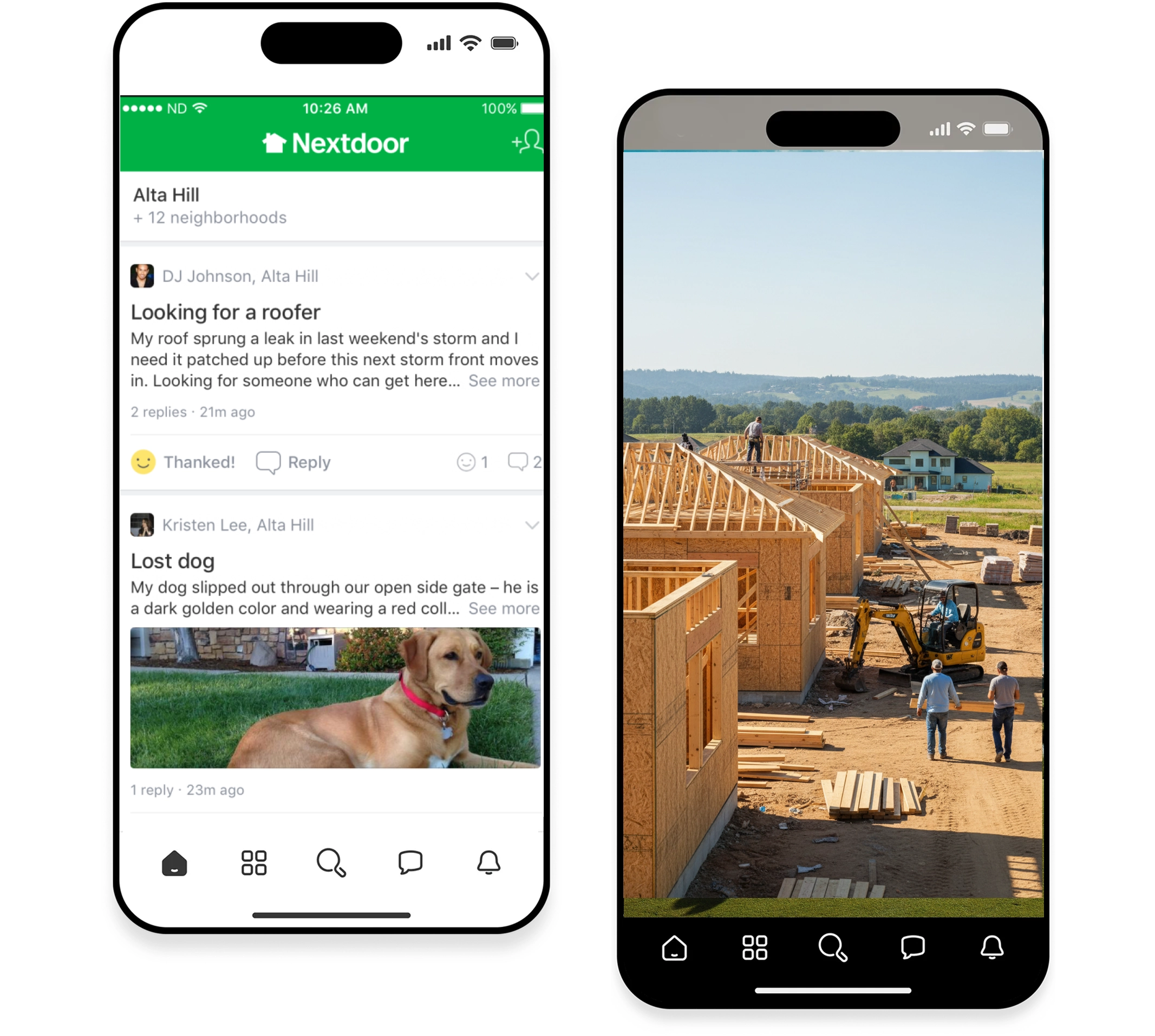
Look, I get it — another app, another login, another thing to "manage." But here's the thing about Nextdoor: it's not LinkedIn, it's not some algorithm chasing engagement, it's literally your neighbors asking "does anyone know a good [insert your trade here]" in real time. No ad spend, no boosted post, just your name showing up when Karen on Maple Street needs her gutters cleaned before Thanksgiving. If you're a local contractor and you're not on there, you're letting the guy who is on there scoop up jobs that are practically falling in your lap.
The recommendation feature is the whole game — when someone posts asking for a referral, past customers can tag your business right in the comments, and that recommendation sticks to your profile permanently. That's word-of-mouth, except it's searchable and it doesn't fade when your customer moves out of state. Combine that with the neighborhood targeting (you're not competing with contractors three counties over, you're competing with the two other guys actually driving these streets) and it's about as low-effort, high-return as marketing gets. Doesn't mean you scale into some lead-gen machine off it — just means when someone in your service area needs work done, you want to be the name that pops up.
Setting up your Business Page — quick and dirty:
- Go to business.nextdoor.com and hit "Get Started"
- Enter your business name, category (pick your actual trade, don't get cute with it), and service area/zip codes
- Verify your address — Nextdoor will mail you a postcard with a code, or you can sometimes verify instantly with a phone/business email
- Fill out your profile — logo, a few photos of completed work, your website, hours, and a short bio (skip the corporate speak, just say what you do and who you are)
- Ask your last handful of happy customers to leave you a recommendation — this is the single biggest lever, don't skip it
- Start browsing the "Recommendations" tab in your service area and jump into threads where people are asking for your trade
That's it. Costs you nothing but twenty minutes, and it's one of the few platforms where being a real, known local guy is actually the advantage instead of the disadvantage.
The Free Side vs. the Paid Side — and Which One You Actually Need
Here's the deal: your Business Page is free, full stop, and it should always be your starting point. To list your business, you first create or claim your Business Page that displays basic information about your business or services. That free version already gets you a lot — a real profile, the ability to collect recommendations, and your name showing up when neighbors are asking around for someone in your trade. The catch on the free side is you're capped — you only get two posts a month, and free reach on those posts generally stays local, roughly within a couple miles. So free is great for visibility and reputation, but it's not built for you to run a real marketing push.
The paid side is where Nextdoor stops being "nice to have" and starts being an actual lead channel — that's Nextdoor Ads and Local Deals. Once you outgrow the two free posts, paid ads let you expand your reach from a couple miles out to as far as 30 miles, and you can run it a few different ways — driving traffic to your website or booking page, pushing a discount through a Local Deal, or just generating direct messages from interested neighbors. The reason it's worth the money, unlike a lot of paid social, is who's on the other end — a big chunk of Nextdoor's users are homeowners, and a large share of them say they've been influenced by a recommendation they saw on the platform. That's not some scroll-and-forget audience, that's people actively looking for someone to hire.
My take: don't skip straight to paid. Build the free page first, get your recommendations stacked up (a lot of contractors don't realize you need a handful of those just to even show up in search results), and see how much organic traction you get from just being active and responsive. Once you've got that foundation and you're ready to push into more territory or fill a slow stretch, that's when you turn on the paid side. No sense paying to advertise on a platform where you haven't even set the table yet.


.svg)